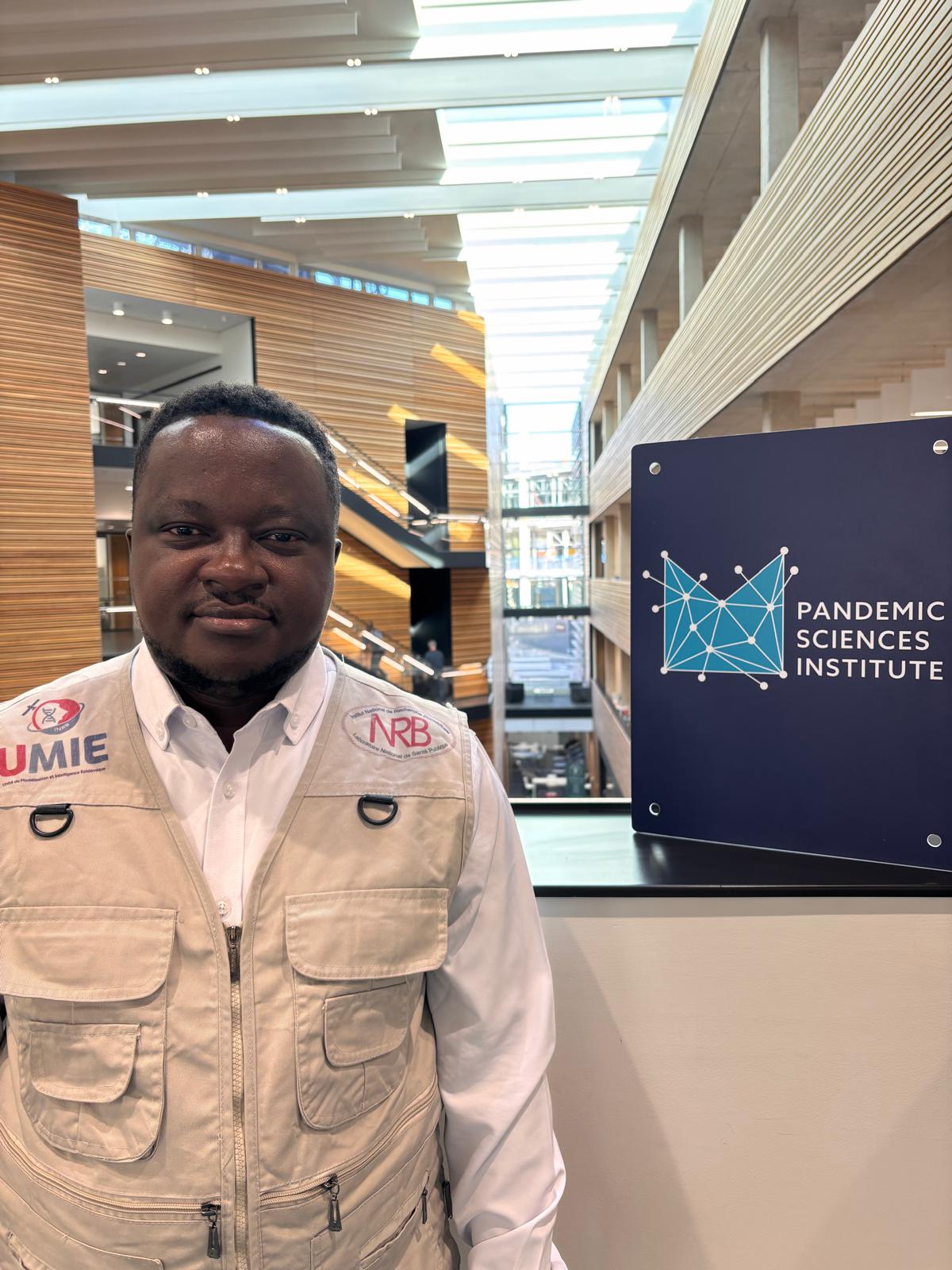
How can epidemiological data become useful for public-health decisions during an outbreak ?
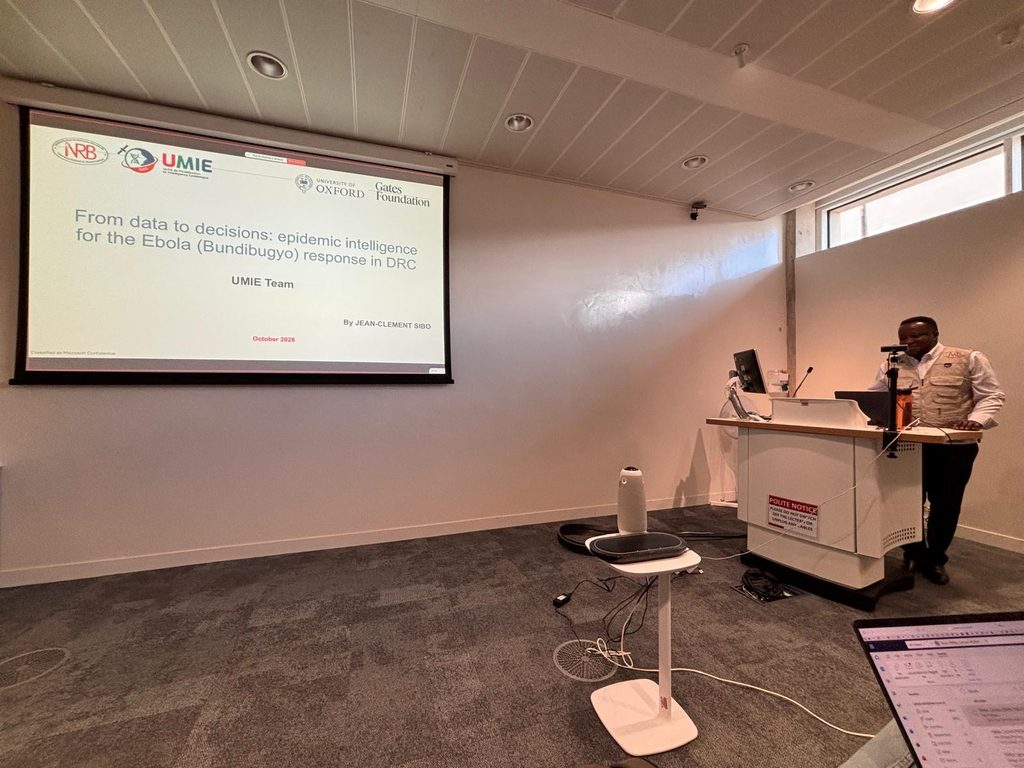
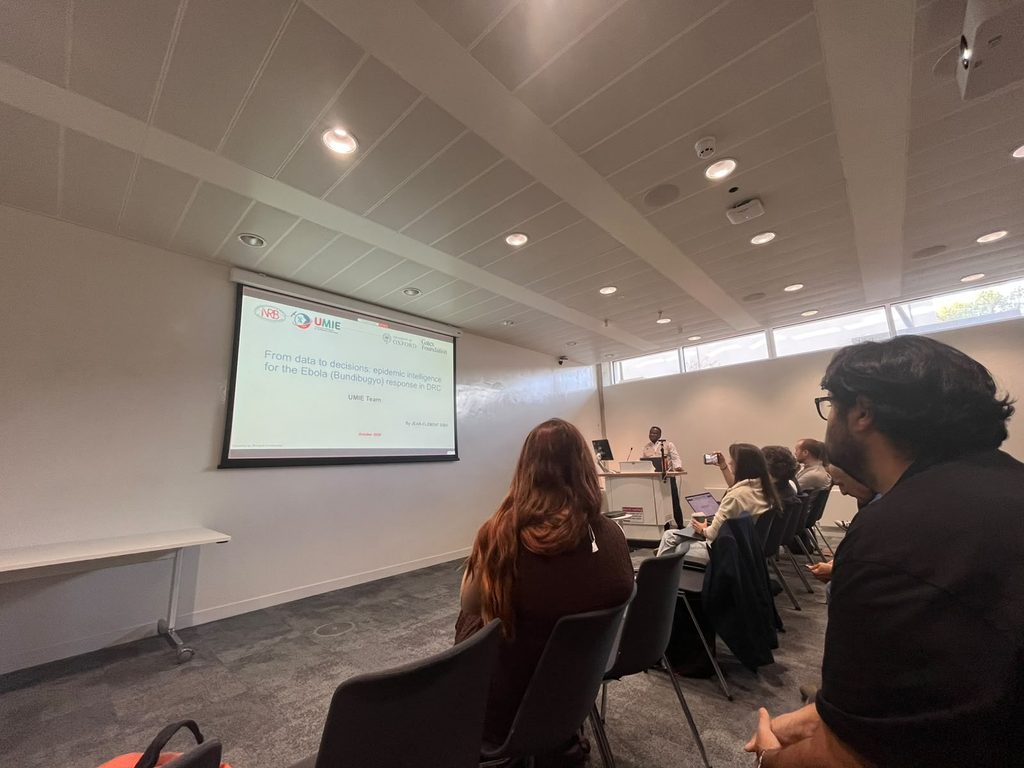
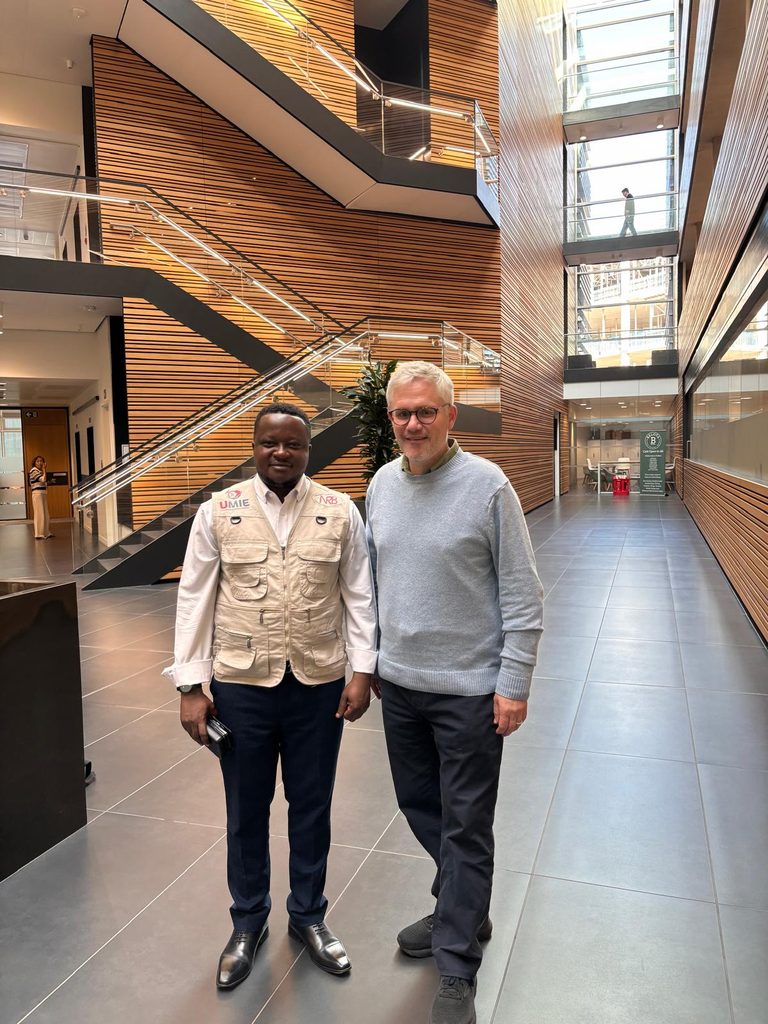
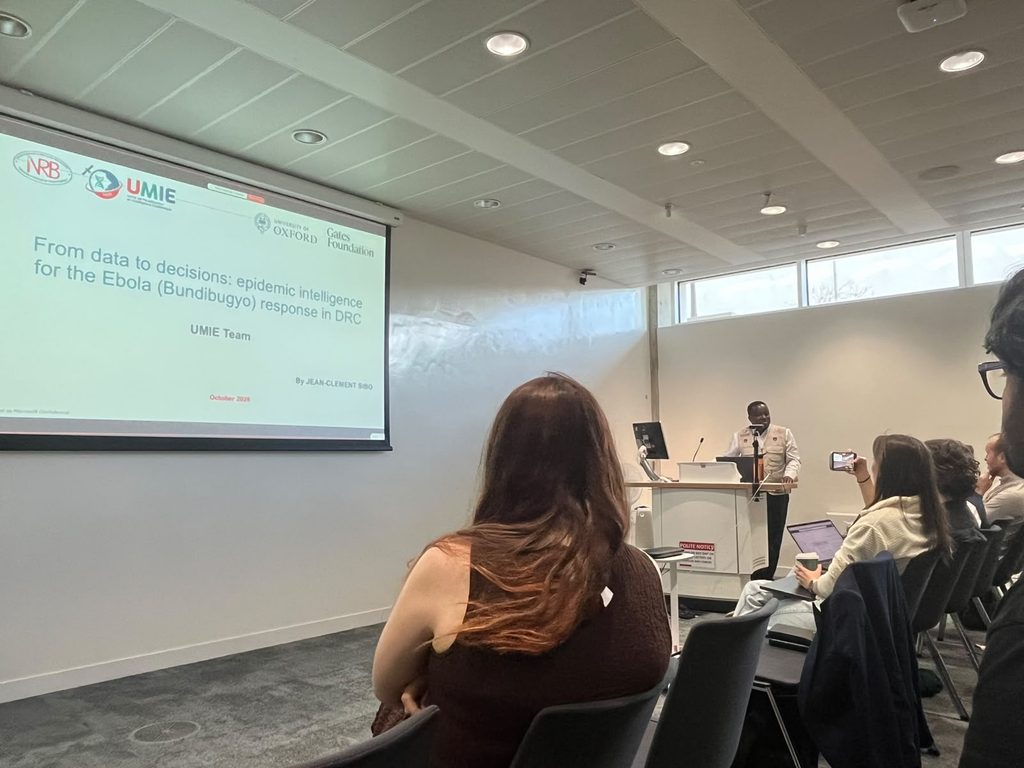
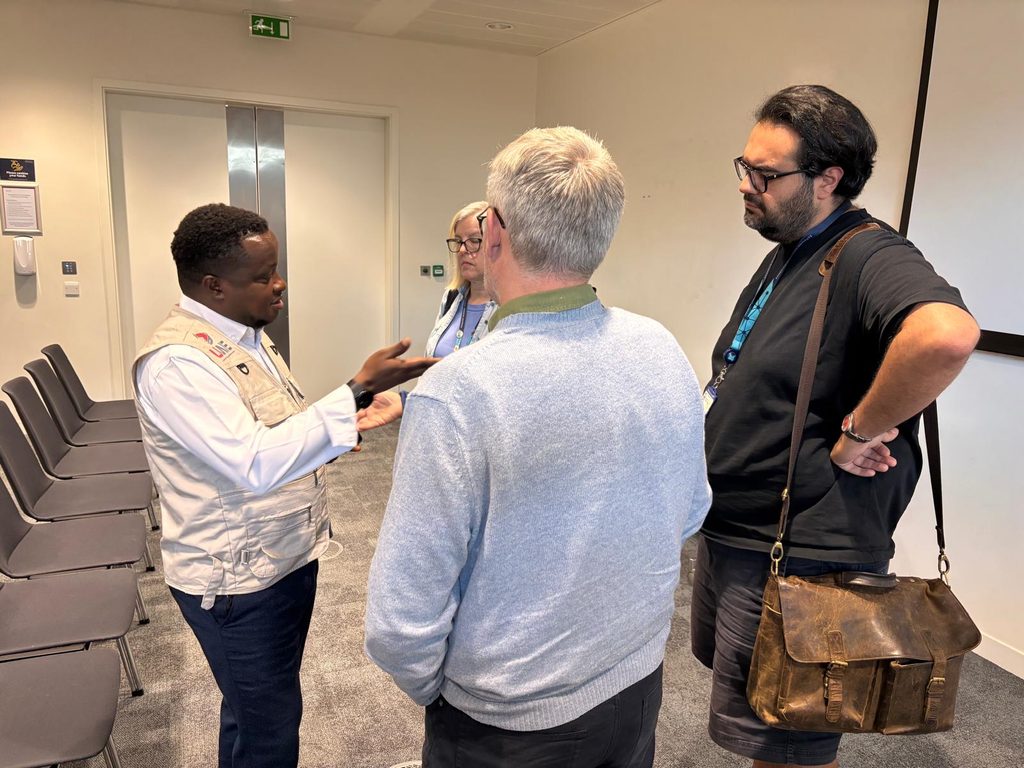
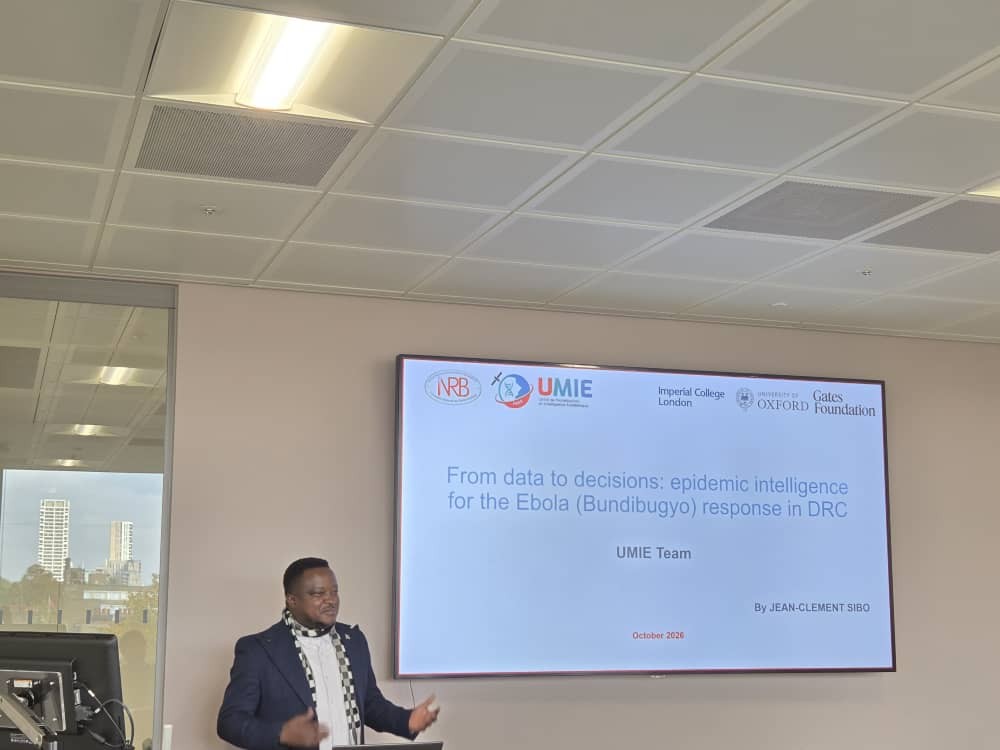
This was the central theme of a presentation by Dr Jean-Clément Sibo on the work of the Unité de Modélisation et Intelligence Épidémique (UMIE) at the Institut National de Recherche Biomédicale (INRB), delivered at the Pandemic Sciences Institute, University of Oxford, United Kingdom, in October 2026.
UMIE was created in 2025 through the Gates-funded MODE-MPOX project, with a clear objective: strengthen the capacity to transform the large amount of data generated during epidemics in the DRC into actionable intelligence.
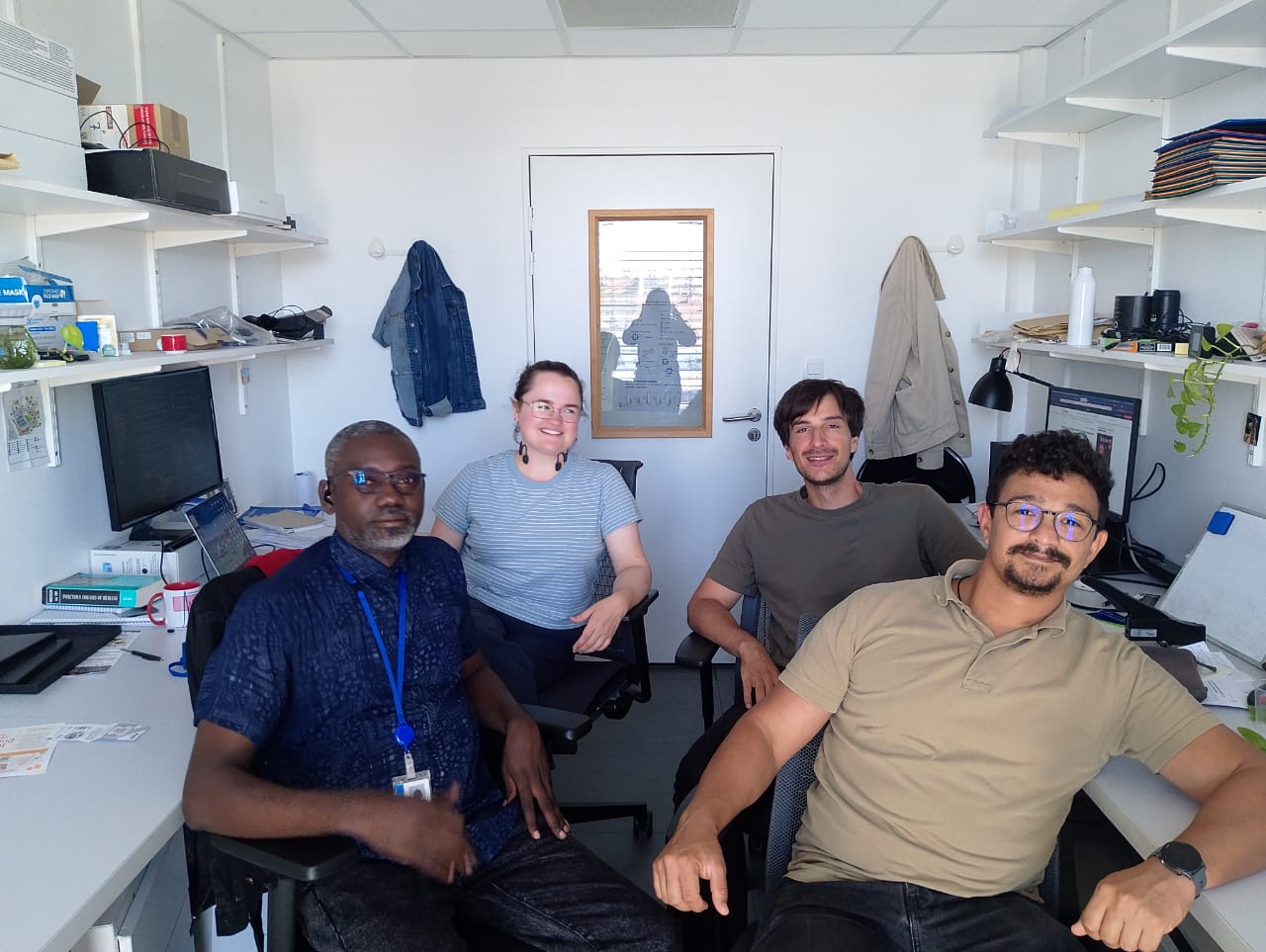
This work is carried out under the leadership of Professor Dav Ebengo, UMIE Leader, and Professor Tania Bishola, UMIE Co-Leader, with the institutional and scientific leadership of Professor Placide Mbala, Head of the Department of Epidemiology and Global Health at INRB.
During the 2026 Bundibugyo virus disease response, this capacity was mobilised rapidly.
UMIE contributed to :
🔹 real-time epidemic monitoring
🔹 Rt estimation and short-term forecasting
🔹 spatial invasion-risk modelling
🔹 genomic and epidemiological analyses
🔹 public epidemic dashboards
🔹 operational analytics for the response
🔹 analytical support to national and international modelling teams
One of the key examples is the spatial invasion-risk model, which combines recent case information with mobility data to identify health zones that may require strengthened surveillance and preparedness.
But modelling is only one part of the process.
The real objective is to connect questions, data, analysis and decisions.
As we describe the UMIE approach: Decision-makers own the questions; UMIE provides the analytics.
The experience also highlights the importance of investing in national modelling capacity. Epidemic intelligence cannot depend indefinitely on external expertise. Sustainable capacity requires trained national teams, strong data systems, analytical infrastructure and long-term partnerships.
The 2026 BDBV response has therefore provided not only an opportunity to support an ongoing epidemic response, but also an opportunity to strengthen a broader national epidemic intelligence infrastructure.
At UMIE, our goal is simple: We are not trying to predict the future perfectly. We are trying to make the next public-health decision better informed.
From data to decisions.